For decades, African technocrats have admired Europe's common market, where open borders and the right to work in any member country are seen as the kind of steps that would boost trade in Africa as well. Those steps are also seen as lowering barriers that now deter investors, allowing smaller African states to thrive alongside larger neighbors.
Archie Machaka, who runs a trucking company based in Zimbabwe, says that what should be a 10-day trip to drive a truckload of copper from a mine in the Democratic Republic of the Congo to a container depot outside Johannesburg in South Africa sometimes takes six weeks. His drivers must wait for exit documents in the Congo that can take a month to process. Then a new customs policy in Zambia, designed to check those papers more thoroughly, can leave his trucks idling for three or four days.
The new border regime "was supposed to improve efficiency, but it's not really coming through," Mr. Machaka said.
Faced with such problems, African countries are seeking more ways to work together.
Since 2000, the Southern African Development Community, encompassing 15 countries from the Congo to South Africa, has been lowering import and export tariffs between members. It plans eventually to eliminate them altogether.
South Africa is particularly keen to boost regional trade as an antidote to sluggish demand from Europe, the country's largest trading partner.
Last month, South Africa's finance minister, Pravin Gordhan, said his country wanted to join with its neighbors to fund large-scale infrastructure projects—such as highways running north into the heart of the continent—and a regional power grid that could attract investment from private South African energy companies. South Africa's National Planning Commission earlier this month recommended synchronizing agricultural policies among southern African countries to share crop surpluses. It also encouraged simple manufacturing in South Africa's lower-wage neighbors to create regional supply chains.
The continent's most advanced regional trade bloc, the East African Community, already guarantees the right to work across Kenya, Uganda, Rwanda, Burundi and Tanzania. Those governments also coordinate some fiscal policies, for instance by releasing their federal budgets on the same day. National parliaments are working on legislation that would further synchronize immigration and tariff laws.
Closer ties are paying off for east Africa's biggest economy: Kenya. In 2010, the bloc surpassed the EU as the top destination for Kenyan exports.
"We want to develop this corridor vigorously and collectively," said Mugo Kibati, director of a government program to overhaul Kenya's economy by 2030 and former chief executive of East African Cables, a telecommunications and power-transmission company.
But Africa is backing away from one prominent aspect of Europe's economic union: a common currency.
An African currency was once seen as an ultimate goal of continental integration. By 2018, leaders in southern Africa had aimed to have a common currency in circulation from South Africa's Cape Town to Kinshasa in the Congo. Not anymore.
"I don't think anyone thinks this is realizable or in fact appropriate," Gill Marcus, governor of South Africa's reserve bank, said last week.
She and other officials have noted repeatedly that the euro zone couldn't reconcile feeble economies like Greece with powerhouses such as Germany. That relationship is akin to South Africa and neighboring Zimbabwe, where three years ago inflation hit an annual rate above 200 million percent. Zimbabwe has abandoned its own currency in favor of the U.S. dollar, halting an economic tailspin.
Even in west Africa, where 14 countries have used a common currency tied to the French franc and the euro since the end of World War II, officials have soured on a broader, independent monetary union. It would need to balance the likes of Nigeria, a significant oil exporter, with tiny Togo, an agrarian country with anemic growth rates.
Such vast discrepancies also mean forming an integrated market would be more difficult in west Africa. In addition to Nigeria's economic muscle and vast population, it's an English-speaking country in a generally Francophone region. A violent five-month power struggle in Ivory Coast earlier this year highlighted the risks countries in the region face in tying their fiscal well-being to one another.
Gains are being made nonetheless. A widening network of transborder highways has slashed the time it takes to transport goods across a region once infamous for its number of road blocks per mile.
Showing posts with label Africa. Show all posts
Showing posts with label Africa. Show all posts
Monday, 21 November 2011
Africa wants to be Europe without the Euro
The Wall Street Journal today features a useful article examining the process towards - and motivations behind - regionalism in Africa:


Wednesday, 21 September 2011
Wired: US Establishes New Drone Bases for African Shadow Wars
Wired magazine's Danger Room reports on American preparations for the next predicted phase of "the drone wars", extending the practical reach of the US as a superpower:
Washington is quietly setting up at least two new East African drone bases, plus one on the Arabian Peninsula, to support the expanding U.S. shadow war against Islamic militants in Somalia and Yemen. An apparently new facility has been built in Ethiopia. In the island nation of Seychelles, a defunct airfield is being reactivated. A third base is being set up in or near Yemen.
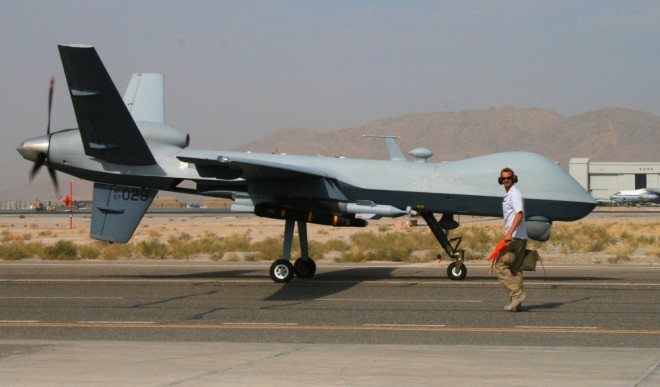
The news, first reported by The Washington Post and The Wall Street Journal, should come as no surprise to close observers of America’s shadow war on the borders of the Indian Ocean. But the base expansion could be met with outrage by the people most directly affected, especially Africans themselves. For years, Washington has insisted that it wouldn’t build new bases in Africa.
The new drone facilities are a small step for a Pentagon and CIA already heavily invested in the Indian Ocean region. While mercenaries and U.S. allies — “proxies” — do most of the fighting in Somalia and Yemen, American warships, aircraft and special operations forces also play an important role. U.S. Reaper or Predator drones have struck militants in Yemen at least six times total in 2010 and 2011. In Somalia, drones have attacked at least twice since 2007. U.S. forces have also hit Somalia’s al-Shabab Islamic group a total of six times, that we know of, using cruise missiles and Special Forces helicopters.
The American base in the tiny country of Djibouti, north of Somalia, provides food and fuel to the warships and serves as a launching pad for the unmanned vehicles and choppers. The Djibouti base has been around since 2001. U.S. Special Forces operated from a small base in Kenya beginning “a few years” prior to 2007, according to military consultant Tom Barnett. American commandos also launched attacks from an unspecified Ethiopian location in early 2007. The Seychelles drone base was open for business in 2009 and 2010 before temporarily shutting down.
Amid all this activity, Washington insisted it had no plans for new African bases. “I want to dispel the notion that all of a sudden America is, you know, bringing all kinds of military to Africa. It’s just simply not true,” then-President George W. Bush told reporters in Ghana in 2008. Bush was trying to reassure African audiences that the new U.S. Africa Command would not mean an expanded U.S. military presence in Africa. Africa Command kept its headquarters in Germany, but the U.S. presence expanded anyways — though many of the forces operate outside of Africa Command’s purview.
For Washington, the rationale for new bases is clear. “We do not know enough about the leaders of the Al Qaeda affiliates in Africa,” a senior U.S. official told The Wall Street Journal. “Is there a guy out there saying, ‘I am the future of Al Qaeda’? Who is the next Osama bin Laden?” If finding and killing the next bin Laden means breaking a promise over African bases, the U.S. seems content with going back on its word.
Sunday, 6 February 2011
Observer: China's economic invasion of Africa
Xan Rice in the Observer speaks to a number of Chinese citizens who have made the move to Africa...
http://www.guardian.co.uk/world/2011/feb/06/chinas-economic-invasion-of-africa

http://www.guardian.co.uk/world/2011/feb/06/chinas-economic-invasion-of-africa

Wednesday, 26 January 2011
Economist Audio Slideshow: Rape, A Weapon of War
The Economist features a newly-added audio slideshow in which photojournalist Marcus Bleasdale talks about a selection of his images chronicling the impact of rape in war-torn areas of Africa:
Thursday, 14 October 2010
Information is Beautiful: The True Size of Africa
From David McCandless' stunning publication and associated website, Information is Beautiful, comes this graphic revealing the true size of Africa in comparison with several parts of the world more prominently thought of...
 This evocative image forms but the centerpiece of a larger statistical comparison (click to enAfricanate!):
 Certainly puts things into some perspective!


Subscribe to:
Posts (Atom)